
 Upgrade Storage
Omitting authors last name in subsequent citations fails sometimes
I have modified my Chicago author-date style so that it does not include authors last name and date in subsequent citations. For example, to change this:
The argument that all dogs are black (Brown 1990, 152) is a contentious one (Brown 1992, 166) and outdated (Brown 1992, 172).
Into this:
The argument that all dogs are black (Brown 1990, 152) is a contentious one (1992, 166) and outdated (172).
I am aware that you cannot exclude authors last name from different subsequent citations, i.e. (1992, 166), but in those cases I just use "omit author" option.
It works fine for most of the time, however, I noticed that Zotero sometimes fails to do so, like here:
https://s3.amazonaws.com/zotero.org/images/forums/u7992155/0uj4py6g0stixqqhqbw3.png
The last, block quote should also be (150), as it is from the same book. I thought maybe it had something to do with different style, but on other places it works fine.
P.S. I also noticed something else: it seems that inserting a footnote breaks "the continuity" Zotero recognizes, but I would have to test it further.
The argument that all dogs are black (Brown 1990, 152) is a contentious one (Brown 1992, 166) and outdated (Brown 1992, 172).
Into this:
The argument that all dogs are black (Brown 1990, 152) is a contentious one (1992, 166) and outdated (172).
I am aware that you cannot exclude authors last name from different subsequent citations, i.e. (1992, 166), but in those cases I just use "omit author" option.
It works fine for most of the time, however, I noticed that Zotero sometimes fails to do so, like here:
https://s3.amazonaws.com/zotero.org/images/forums/u7992155/0uj4py6g0stixqqhqbw3.png
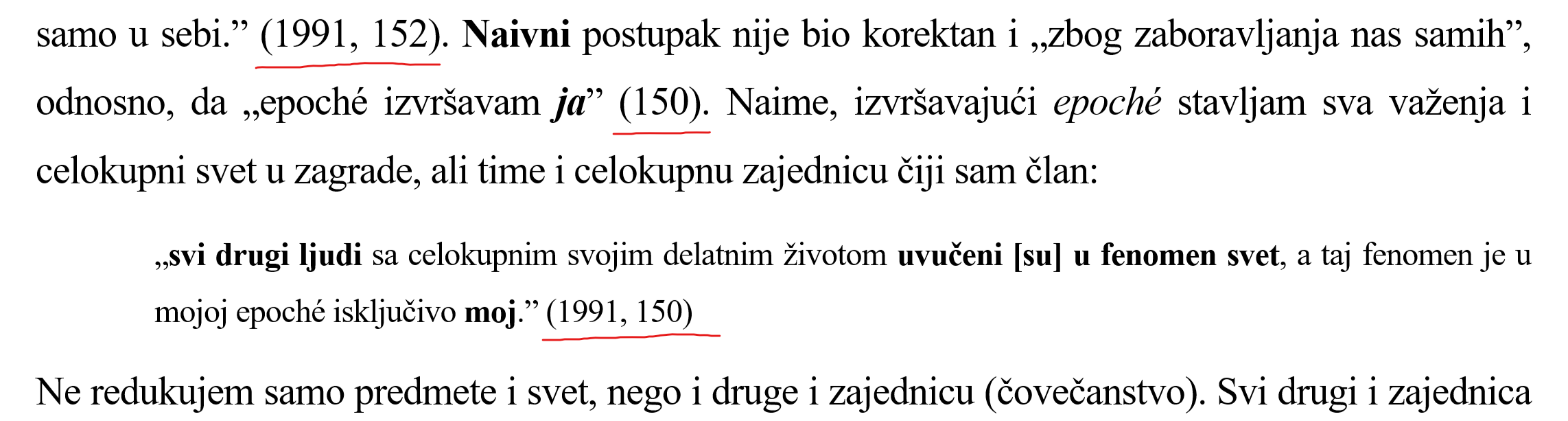
The last, block quote should also be (150), as it is from the same book. I thought maybe it had something to do with different style, but on other places it works fine.
P.S. I also noticed something else: it seems that inserting a footnote breaks "the continuity" Zotero recognizes, but I would have to test it further.
No Zotero citation style I know of would omit the year, so you would have to start by saying which style you are using.
https://forums.zotero.org/discussion/114259/how-to-suppress-author-in-subsequent-citations-in-text?new=1
It was two years ago, so I believe it is a modified Chicago 17th (author-date). I have it in my Zotero, but I don't know how to share it with you.
https://s3.amazonaws.com/zotero.org/images/forums/u7992155/e72hhml7qrucrj9t0tym.png
https://s3.amazonaws.com/zotero.org/images/forums/u7992155/vyzx695nx5fgljg1w9te.png
The issue is the same page number -- when something is both the same work and the same page number, the position is ibid, not ibid-with-locator, so you'd have to experiment with that, probably something like
<else-if position="ibid" variable="locator" match="all">(because position="ibid" is also true for subsequent citations without any page number, which you don't want)
Yes, I remember what you said, and it is fine - I just use "Omit Author" option in those cases.
And no, I don't need 'ibid', it's fine as is. I was just wondering, thinking it is a glitch, that sometimes it does detect it, but sometimes not, and they are rather close.
But now you explained that it doesn't because it thinks its a new paragraph, am I right? I could swear that sometimes it failed also in the same paragraph, but I just can't seem to find those places for the life of me.
Your screenshot shows two subsequent citations to the 1991 work, with the second one not omitting the year as you want. The reason it doesn't is that they're both citing the same page (150), a situtaiton which the CSL treats as "ibid" not as "ibid-with-locator" -- the code you're currently using for your style only tests for "ibid-with-locator". You have to adjust it; I'm suggesting how above.
https://s3.amazonaws.com/zotero.org/images/forums/u7992155/84ri7bnaawhx164or9tu.png